Showing posts with label Children's Health. Show all posts

Sunday, July 31, 2011

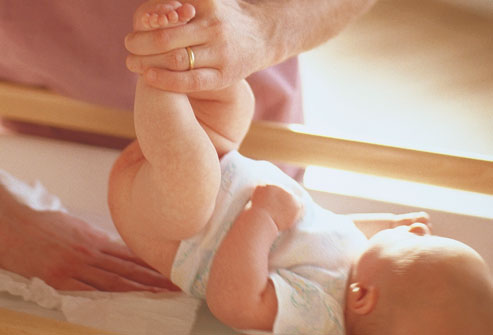
How to Diaper Your Baby

Diaper Changing, Step-by-Step


Whether you've never changed a diaper before or you're an old hand, don't worry -- you'll get plenty of practice with your new baby. Most parents have made common mistakes, like putting a diaper on backward or lopsided, or even getting an unexpected spray of urine from their baby boy. So, you're not alone. These step-by-step tips will help you master the art of diaper changing and fix any first-time mistakes fast.

Get Your Supplies Together


Have everything at hand, because you never want to leave your baby unattended. You'll need: a clean diaper or two, something to wipe baby with, and a flat surface. If you use cloth diapers, you'll need a clean diaper cover or waterproof pants (and pins). If your baby has diaper rash or is less than a month old, have cotton balls or squares, warm water, and a towel handy.

Always Keep One Hand on Your Baby


Wash your hands and place your baby on the changing table or a flat surface. Use the safety straps, or make sure to keep one hand on the baby so he doesn't roll off. Never leave your baby unattended, even for a minute. If he wiggles a lot, distract him with a mobile or a brightly colored toy. Undo the dirty diaper, hold your baby's legs with one hand and use the other hand to pull down the front of the diaper. Don't remove it just yet.

Wipe From Front to Back


First, use the front part of the diaper to help wipe your baby -- wiping from front to back to avoid a urinary tract infection. Then use a mild wipe or wet washcloth to clean baby -- again wiping from front to back. For a newborn or baby with diaper rash, use cotton balls or squares and warm water. Pat baby's bottom dry. If you have a boy, keep a clean diaper over his penis while you're changing him so he doesn't urinate on you.

Swap Dirty Diaper for Clean One


Lift baby's legs and slide the dirty diaper out. Hold your baby's legs to keep him from touching the messy diaper. Slide a clean diaper underneath your baby. On a disposable diaper, the adhesive tabs go in back and should be about belly-button level. Pull the front up between baby's legs. For a boy, make sure his penis is pointing down so he doesn't pee out of the top of his diaper.

Use Your Fingers to Test the Fit


Close the tabs on a disposable diaper or pin the corners of a cloth diaper together. Make the diaper snug, but be sure you can place two fingers between the diaper and baby's waist. With a newborn, fold the top of the diaper down so that the umbilical stump is exposed. Or use a newborn diaper with a cutout for the stump.

You May Want to Flush the Poop


What do you do with the old diaper? With cloth diapers, shake any solid waste into the toilet before tossing into the diaper pail. Some parents do this with disposables, too. With a disposable, tape it up and put it in the trash or diaper pail. Some parents put them in a plastic bag or zipper-top bag first. For cloth diapers, store in a dry or wet diaper pail until ready to wash.

Take Your Time & Enjoy


Many moms and dads find that diaper changes are a great time to connect with their babies. After all, you're leaning over your baby, touching, and talking or cooing to him or her. Your baby is looking up at you and listening to your voice. Take some time to sing a song or play peek-a-boo. Although some diaper changes will have to be done quickly, when you have a few minutes, try to enjoy the ritual.

Friday, July 1, 2011

Treating Your Child’s Cold or Fever

Reviewed by Hansa D. Bhargava, MD, FAAP on February 18, 2011
Source: WebMD

How can you soothe and treat your child's cold?

Use this quick pictorial Q&A guide to see how to soothe your sick child at home and how to safely give over-the-counter (OTC) medicines to ease a fever, runny nose, sore throat, or other common cold symptoms.

What should I do if my child has a fever?
Pediatricians consider a fever significant when it's above 100.4 degrees. Call your pediatrician if your child is younger than 12 months and has a fever; has other symptoms along with the fever; is a toddler who has had a fever for more than two days; or is an older child with a fever for three or more days. In other cases, it's usually safe to use children's ibuprofen or acetaminophen. Never give a child aspirin -- it poses a risk of Reye's syndrome, a rare but serious illness that affects the liver and brain.

What else can I do to bring down my child’s temperature?
A sponge bath with lukewarm water may help. Never use cold water, ice, or rubbing alcohol. Dress your child lightly and don’t pile on blankets. Watch for signs of dehydration. Call the doctor immediately or go to the emergency room if your infant has dry diapers, a dry mouth or tongue, or is not feeding well. For an older child, call the doctor if he appears dehydrated, is not urinating enough, or is not drinking well.

When do I need to call my pediatrician?
Aside from fever and dehydration, call your pediatrician if your child is younger than 12 months and you think he has the flu; has yellow or green nasal mucus; any discharge after 10 days, or discharge coming from the eyes. Go to the emergency room if your child has trouble breathing, is acting very sick, refuses to eat or drink, has a rash, or you are concerned.

Will chicken soup really help my child's cold?
Yes. Some studies show chicken soup may help reduce inflammation. If nothing else, it's nutritious and can help prevent dehydration. Also give plenty of other fluids, like water, milk, or an electrolyte solution. Other home remedies to try: Inhaled steam from a hot shower or a cool mist vaporizer may help a stuffy nose. Menthol chest rubs can help loosen mucus to be coughed out. Do not use medicated vapor in children under 2. Petroleum jelly under the nose can soothe irritated skin.

What eases a sore throat and cough?
Most sore throats are caused by colds and last about four to five days. For kids over the age of 2, give warm, non-caffeinated tea or water with 1/2 teaspoon of honey and lemon to ease a sore throat and cough. Try 1 teaspoon of buckwheat honey by itself to ease a cough in kids over the age of 1. For kids 5 and older, hard candy or over-the-counter lozenges with anesthetic can help reduce pain. Gargling with warm salt water may help, too. Strep throat tends to come on suddenly and not be accompanied by cold symptoms. Call your doctor if you suspect strep -- your child needs antibiotics

How old does my child need to be to take cough or cold medicine?
Don't give over-the-counter cold medicine or cough medicine to children younger than 4. Several studies have shown that these OTC medicines don't actually help symptoms in children so young. In fact, they may cause serious and potentially life-threatening side effects. To ease cold symptoms, give extra fluids, use a nasal aspirator, and use a humidifier.

When my child has a cold and a cough, should I give one medicine or two?
Choose medicines only for the symptoms your child has. So, it's OK to give one multi-symptom over-the-counter medicine -- as long as it fits your child's symptoms. To avoid over-medicating your child, read and follow the directions, use the measuring device that is packaged with the medication, and don't choose products that treat symptoms your child doesn't have. For instance, don't choose a multi-symptom cold medicine or cough medicine for only a sore throat.

If you give two medicines, don't double up on a drug.
Be sure you don't give your child two over-the-counter medicines with the same active ingredients. For example, many cold medicines for kids contain acetaminophen -- which is the same as Tylenol. In the same way, a cough medication may also contain other ingredients to treat decongestion. So it's easy to unintentionally double a child's dose if you don't read carefully. Compare ingredients in the 'Drug Facts' box so you don't risk giving your child an overdose.

Decongestant, expectorant -- what do I give when?
Decongestants shrink stuffy nasal passages. They're available as nasal sprays or oral medicine. Nasal sprays should not be used for more than 2-3 days in a row. Cough expectorants may help thin mucus so it can be coughed up. Your child needs to drink a lot of water for an expectorant to work. Cough suppressants don't help get rid of mucus. Even if a cough keeps a child awake at night, it's usually better not to suppress it.

How do I figure out the right dose?
Dose OTC medication according to the directions based on your child's age and weight. Read the "Warnings" sections for possible drug interactions and side effects. Pay attention to label abbreviations like Tbsp (tablespoon) and Tsp (teaspoon), oz. (ounces), ml. (milliliter), and mg. (milligram). Those are all very different measurements. And use the measuring device that is packaged with the medication.

Should I wake my child up for a dose?
Rest is one of the best remedies for a cold, so let her sleep. If that means skipping a dose of over-the-counter medicine, don't worry -- give the next dose when she wakes up, or wait until morning. If your child has been taking an OTC medicine for more than three days, she should see her doctor.

Does it really make a difference if I use a kitchen spoon for medicine?
It can. To be safe, avoid using common kitchen spoons, which can significantly vary in size. If your child's over-the-counter medicine came with its own cup or spoon, be sure to use it. What if there is no measuring device with the medication and the label says to give a dose of 2 teaspoons? Use an actual measuring spoon or dosing cup marked in teaspoons. That way you'll know you gave him the right dose -- enough to work, but not too much.

If my child vomits, should I give another dose?
No. If your child vomits up his medicine or spits some of it out, you may be tempted to give another dose. But you can't be sure how much of the OTC medicine your child actually swallowed, and giving another full dose risks giving too much. Instead, call your pediatrician for instructions. If your child hates the taste of the medicine, ask your pharmacist if you can mix it with a favorite food or drink.

I don't have any children's medicine. Can I give half an adult dose?
Never give your child OTC medicines that are meant for adults. You'll just be guessing at the right dose, and some medicines are formulated differently for children. Use only products that are labeled for use in babies, infants, or children ("for pediatric use").

Don't call OTC medicine "candy."
Kids, especially young ones, love to imitate what adults do. Take these precautions:
*Avoid taking your own prescription or OTC medication in front of children.
*Be sure you never call any medicine "candy."
*Don't use sweet-tasting medication -- like children's vitamins -- as a reward. You can offer a favorite drink afterward to "wash the taste away."

Monday, June 13, 2011

Childhood Illnesses Every Parent Should Know

Reviewed by Louise Chang, MD on May 17, 2010
Source: 2010 WebMD

Childhood Illnesses: The Facts
While vaccines have made some childhood illnesses rare, many others remain a fact of life. They range from common infections like croup to mysterious ailments like Kawasaki disease. In the following slides, you'll learn the facts about two dozen childhood illnesses. But be sure to consult your pediatrician for proper diagnosis and treatment.

RSV
RSV stands for respiratory syncytial virus, and it's the top cause of bronchiolitis (inflammation of the small airways) and pneumonia in U.S. infants. The infection begins with flu-like symptoms, including a fever, runny nose, and cough. Up to 40% of young children with their first RSV infection will develop noticeable wheezing, and up to 2% will require hospitalization. RSV tends to be milder in older kids and adults.

Ear Infection
Young children are prone to ear infections because of their small Eustachian tubes. These tubes connect the ears to the throat, and they may get blocked when a cold causes inflammation. This traps fluid inside the middle ear, behind the eardrum, allowing germs to breed. The symptoms include fever, fussiness, and ear-pulling. Most ear infections are due to viruses and go away on their own. Childhood vaccinations help prevent infections from certain bacteria that can cause ear infections.

Glue Ear
Glue ear refers to a buildup of fluid in the middle ear without any pain. The medical term for glue ear is otitis media with effusion or OME, and it often follows an acute ear infection. The fluid usually clears up on its own. If it lingers and threatens to interfere with a child's hearing, ear tubes may be recommended to help the fluid drain.

Croup
The hallmark of croup is a tight cough that sounds like a barking seal. The cause of the cough is inflammation in the upper airways, usually due to a virus. If breathing becomes severely impaired, hospital treatment may be needed. However, most kids get better on their own in about a week. Croup is most common in toddlers.

Hand-Foot-and-Mouth Disease
Hand-foot-and-mouth disease causes a fever along with blisters on the inside of the mouth, the palms of the hands, the buttocks, and the soles of the feet. In the U.S., it is usually caused by coxsackievirus A16. This virus tends to spread among children during summer and early fall. Most cases are not serious and last a week to 10 days.

Pinkeye
Tearing, redness, itching, and crusty eyelashes are all signs of conjunctivitis, commonly called pinkeye. Often caused by the same viruses as the common cold, pinkeye spreads rapidly in schools and day care centers. Consult your pediatrician to determine whether your child needs treatment. Most cases clear up in four to seven days.

Fifth Disease
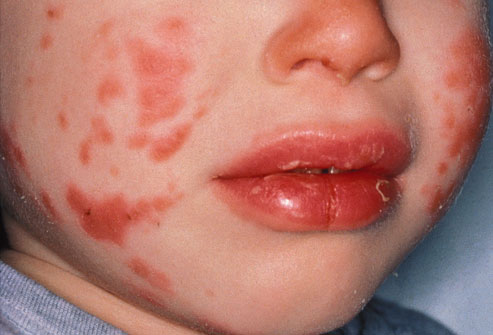
Often called "slapped cheek" disease, fifth disease causes a bright red rash on a child's face. A rash may also appear on the torso, arms, or legs. The culprit is human parvovirus B19, a virus that may cause mild cold-like symptoms before the rash is seen. Up to 20% of kids get it by age 5, and up to 60% have had it by age 19. The rash usually disappears in seven to 10 days.

Rotavirus
Before the introduction of an effective vaccine, rotavirus was the top cause of diarrhea-related deaths in young children. The main symptoms are vomiting and watery diarrhea, which can make babies become dehydrated very quickly. There are now two rotavirus vaccines for infants, and studies indicate a dramatic drop in the number of new cases.

Kawasaki Disease
Kawasaki disease is a very rare and mysterious ailment that strikes children under age 5. The symptoms include a high fever, patchy rash, swelling and redness of the hands and feet, bloodshot eyes, and chapped, red lips. Without treatment, the illness can damage the heart and may be fatal. Doctors have yet to discover what causes Kawasaki disease.

Chickenpox
Once a very itchy rite of passage, chickenpox is now preventable through the varicella vaccine. The reasons for vaccination go beyond sparing your child the uncomfortable red blisters. Chickenpox can cause dangerous complications in newborns, adults, and pregnant women. Before the vaccine, chickenpox sent 11,000 Americans to the hospital every year.

Measles
If your kids are up-to-date on their vaccines, you probably don't have to worry about measles. But the CDC has reported outbreaks among unvaccinated children. The infection starts with a fever, runny nose, and cough. As these symptoms fade, a full-body rash appears. Most kids get better in two weeks, but some develop pneumonia or other problems.

Mumps
Mumps is another childhood illness that was very common before a vaccine was developed. The infection often causes no symptoms, but when it does, the classic sign is swollen glands between the ear and jaw. This creates the appearance of "chipmunk cheeks." Despite high vaccination rates, recent outbreaks have infected thousands of people in the U.S.

 Rubella (German Measles)
Rubella, also called German measles, is a mild virus that usually causes no serious problems. However, it can harm the fetus if a pregnant woman becomes infected. The symptoms are a low fever and rash that spreads from the face to the rest of the body. A standard childhood vaccine called MMR protects against measles, mumps, and rubella.

Whooping Cough (Pertussis)
 Whooping cough makes children cough so hard, they run out of breath and inhale with a "whoop." The infection is most severe in infants and may require hospital treatment. The medical term for the disease is pertussis – the "P" in the DTaP vaccine. Despite widespread vaccination, cases of pertussis are on the rise. Adults may need a booster shot.

Meningitis
Meningitis is an inflammation or infection of the tissue around the brain and spinal cord. In teens and adults, the main symptoms are headache, fever, and stiff neck. Young children may have flu-like symptoms. Viral meningitis is usually mild, but bacterial meningitis is more severe with serious consequences if it isn't treated quickly. Vaccines are available to prevent certain bacterial causes of meningitis.

Strep Throat
Most kids get a sore throat now and then, usually due to a cold virus. So how can you tell if it's caused by the strep bacteria? Sneezing or a runny nose point to a cold. Signs of strep include a sore throat that lasts more than a week, painful or difficult swallowing, excessive drooling, a rash, pus in the back of the throat, fever over 100.4 degrees, or contact with someone with strep throat. Strep throat is treated with antibiotics.

Scarlet Fever
Sometimes a rough, red rash accompanies strep throat. This is known as scarlet fever. The rash begins on the chest and abdomen and spreads all over the body, accompanied by a strawberry-looking tongue and high fever. Without treatment, it can lead to rheumatic fever and, in rare cases, heart damage. That's why scarlet fever was once a dreaded childhood illness. Today, it is easily cured with antibiotics.

Reye's Syndrome
You've probably heard you should never give aspirin to children or teens. Reye's syndrome is the reason. This life-threatening condition may strike kids who take medications containing aspirin during a viral illness. Symptoms include dramatic behavior changes, seizures, and coma. Reye's syndrome has become very rare since the CDC warned against giving aspirin to

MRSA/Staph Infection
MRSA is a type of staph that doesn't respond to some antibiotics. Doctors say MRSA is now the top cause of skin infections. These infections usually appear in the form of sores or boils and may look like a spider bite. MRSA ear, nose, and throat infections are also on the rise in elementary school children.

Impetigo
Impetigo is another bacterial skin infection. It most commonly causes clusters of tiny blisters on the skin that ooze and form a golden crust. Touching the fluid can spread the infection to other parts of the body or other people. It is often caused by staph bacteria but also can be caused by strep bacteria. This type of impetigo is most common in kids ages 2 to 6. If treated with antibiotics, the sores usually heal without leaving scars.

Ringworm
Yet another skin infection, ringworm is actually caused by a fungus. No worms involved. It causes a red, scaly ring on the skin or a round patch of hair loss on the scalp. The fungus spreads easily from child to child, so sharing combs, brushes, towels, and clothes should be avoided. Ringworm is treated with antifungal medication.

Lyme Disease
The hallmark of Lyme disease is a target-shaped rash that appears 1-2 weeks after a tick bite, though not everyone will develop the distinctive rash. The rash may be accompanied by a fever, chills, and body aches. The culprit is a type of bacterium carried by tiny deer ticks. Without treatment, Lyme disease can affect the joints, nervous system, and heart.

Flu
Is it a cold or the flu? These illnesses can have similar symptoms. The flu more commonly causes high fever, chills, body aches, extreme fatigue, and nausea or vomiting. While most children get better on their own, the flu can lead to serious complications like pneumonia, especially in younger children. The CDC recommends an annual flu vaccination for children ages 6 months and older.

Seasonal Allergies
Seasonal allergies, sometimes called hay fever, are not an infection, but a reaction to microscopic particles like pollen  (seen here in pink). Symptoms may include sneezing, watery eyes, and a runny or stuffy nose and may only occur in spring or fall. Kids may constantly rub their nose with the palm of the hand, a gesture called the allergic salute. There is no cure for hay fever, but there are ways to help control the symptoms.